
A few members of the Black Rock & Sage staff have some great book recommendations for the month of March. Check them out below!
—
Jeff Howard, Editor-in-Chief: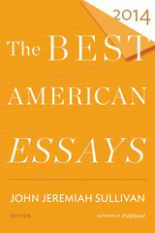
Although I prefer the range of topics and voices presented in the Best American Essays 2015 anthology, the 2014 collection was also a great read. Many of the essays are amazing examples of how to deal constructively and meaningfully with sensitive themes and topics, including suicide, racial prejudice, and sexual abuse. One of my favorite essays from this collection, “Thanksgiving in Mongolia” by Ariel Levy, who was the guest editor of the 2015 BAE anthology, details Levy’s experience covering a story in Mongolia during her first pregnancy. The piece is a gripping account that I think compares in terms of its central theme and careful style to Jill Christman’s brief essay “The Sloth” (which was published in Brevity, not in BAE). Reading those pieces together, along with Cheryl Strayed’s essay “Love of My Life” (published in The Sun Magazine) has demonstrated to me in beautiful detail 1) how good these writers are, but perhaps more importantly 2) how essays on the same topic (grief and loss) can be so different in their final realization. All wonderful and tragic reads.
Anelise Farris, Poetry Editor: 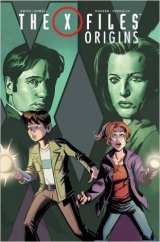
Everyone needs some light, fun reading on occasion, right? I certainly do, and my pick for this month is The X-files Origins comic book, written by Jody Houser and Matthew Dow Smith, with art by Chris Fenoglio and Corin Howell. The comic book traces two different story lines, as Mulder and Scully are young teenagers who live on opposite coasts. Even so, each of their narratives, though different, manage to weave together in such a way that it seems inevitable that Mulder and Scully would turn out to be such a fantastic supernatural-tracking duo. If you are a fan of The X-files this comic is a must, and the easter eggs throughout the series are delightful. Likewise, The X-Files Origins is the perfect comic to begin with if you are totally unfamiliar with the series and are looking for somewhere to start, especially for younger readers.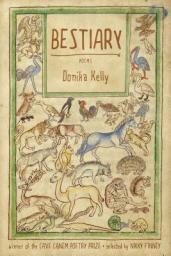
Susan Goslee, Faculty Advisor:
Bestiary: Poems by Donika Kelly. Amazing!
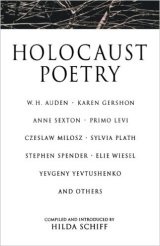 orks are cultural and historical touchstones by which those of us who did not directly experience the Holocaust or have the faintest inkling what it entailed catch glimpses into a series of events which are otherwise unimaginable. For my pick today, I would recommend adding an anthology called Holocaust Poetry, edited by Hilda Schiff, to the list of acclaimed Holocaust literature, of which there is a great deal. Poetry, as an art form, I believe, is uniquely suited to fill in the emotional gaps in our frequently porous cultural understanding—or, in my case, lack thereof—of the Jewish experience in the concentration camps. The polyvocal quality of the anthology too adds to the reading experience. The collection contains poetry by Anne Sexton, Paul Celan, Sylvia Plath, Elie Wiesel, Czeslaw Milosz, Primo Levi, Bertolt Brecht, and many others. United in this anthology, these voices present a mosaic of insight that implores the reader, to borrow a phrase from Wiesel’s stirring poem “Ani Maamin, A Song Lost and Found Again,” to “open your eyes and see what I have seen.”
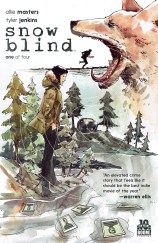 One of my favorite comic books I’ve read recently is Snow Blind, written by Ollie Masters with art by Tyler Jenkins and letters by Colin Bell. Snow Blind centers on a teenager named Teddy, who is probably the coolest loner ever—who gets in trouble for sneaking into a library? Answer: my kind of guy. Any who, after Teddy posts a picture of his dad to social media, the FBI show up, and, long story short, Teddy finds out that his family is in the witness protection program and now they’re in danger. I don’t read a lot of crime comics, but this is so much more than that: it’s a really affecting coming of age story that has ridiculously beautiful art and fantastic lettering. This is one to read again and again.
 ise by Irène Némirovsky. The story behind this collection is as tragic as its contents. Written in the days of Germany’s invasion of France, Némirovsky was a victim of the Holocaust. Her manuscript for these two combined novels were discovered years later and published. the novels themselves detail how the people of France both feared and coped with their German invaders.The novels are an insightful and often bitter exploration of human vanity in the face of great historical upheaval. Having been introduced to these at school, I believe Némirovsky belongs in the canon of great modernists. A must read for lovers of literature from that era.
 ISU's student Journal of Creative Works