Meet Natalie Homer Meeks!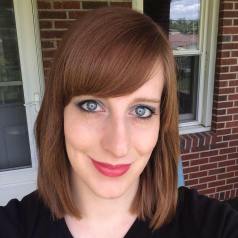
She wore many hats for Black Rock & Sage—assistant editor, prose editor, and editor-in-chief—from May 2013 to August 2015.
Currently, Natalie Homer is a poetry MFA candidate at West Virginia University. She is the poetry editor for The Doctor T.J. Eckleburg Review, and her poetry has been published or is forthcoming in Ruminate, Salamander, Bellevue Literary Review, and others. She enjoys cats, rain, and catching up to the person who cut her off in traffic.
This month, we had the opportunity to chat with Natalie about her favorite places, books, and literary magazines—as well as really important questions like what superpower she’d have if she could and what animal she would be. Natalie also offers some great advice for aspiring poets and literary magazine editors.
- What three traits define you?
Pessimism, sincerity, sarcasm.
- What’s one thing you couldn’t live without?
Rainy, overcast days.
- What is your greatest fear?
That I’m going to bite into a cookie, thinking it’s chocolate chip, when really it’s oatmeal raisin.
- Where is your favorite place to be?
Island Park, Idaho.
- What is your favorite thing to do?
To go on Pinterest for three hours while drinking a sugary, chocolate/coffee drink.
- Where is the best place you have ever visited? Why?
Astoria, Oregon. If you’ve ever visited a town and just felt right about it—like you knew, intuitively, that you could live there—that’s why.
- What would be your ideal career?
Copy editor, editorial assistant, or something with a desk and minimal interaction with the general public.
- What is your favorite book, movie, and band?
The Great Gatsby, Clue (1985), Fall Out Boy.
- What is something that might surprise us about you?
When I was eight, I wrote a series of stories about a fruit bat named Esther. I firmly believed these would make me rich and famous.
- What is your favorite quote?
“Adversity makes men, and prosperity makes monsters.” –Victor Hugo
- If you could have a dinner party with ANY three people (dead or alive), who would they be and why?
Bernie Sanders (because he’s awesome), Alexander Hamilton (because he was my historical crush way before the musical was even a thing), and Sylvia Plath.
- If you had to eat one meal every day for the rest of your life, what would it be?
Shrimp alfredo.
13. If Hollywood made a movie about your life, who would you like to see cast as you?
Steve Buscemi.
- If you were an animal what would you be?
Probably an opossum.
15. If you were stuck on an island, what three things would you bring?
Sunglasses, sunscreen, and a towel.
- If you could have a superpower, what would it be?
Invisibility.
- What kinds of hobbies and interests do you have outside of work?
I spend most of my free time taking arbitrary quizzes on the internet, e.g. “Which Jane Austen Hero is Your Soulmate?” or “How High is Your Pizza IQ?”
- Where do you see yourself in 5 years?
Probably as a bitter adjunct or receptionist with one poetry chapbook from an obscure press on my CV.
- Do you have any favorite literary magazines/publications that you’d like to give a shout out to?
I’m a fan of The North American Review—I feel like the poetry they publish is very accessible. They seem to be one of the few larger magazines that actually publishes unestablished writers on a regular basis.
- Do you have any advice for aspiring poets and literary magazine editors?
For aspiring poets: I think there’s an attitude that a lot of publications are “worthless.” That if you’re not publishing in Georgia Review or FIELD or Poetry that those publications don’t mean anything. I guess as far as securing a tenure track job, that may be the case—but I wouldn’t write off smaller, less well known publications, especially online magazines.
I feel like working my way up with smaller publications that I mentioned in my cover letters when submitting to journals has helped me “move up” a little bit to more recognizable magazines. (As a poetry editor for one online literary magazine, and a reader for another, I certainly take submissions more seriously when the submitter has a few publications under their belt.)
However, with that said, any journal that accepts over 5% of submissions is probably not one you want your work to appear in. Be selective. I would strongly recommend using a tiered system for your submissions. That is, sending poems to the top-tier magazines first, waiting to hear back from them, and then sending those poems to mid-tier magazines, etc.
For literary magazine editors: read the entire submission, even if your first impression is unfavorable. I’ve found poems I thought were gems at the tail end of an otherwise unpromising submission.
—–
For new spotlight posts, please visit our blog the second week of every month (but, of course, do come back more often than that!).


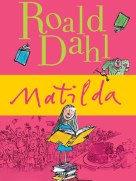
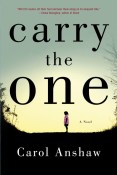 Christopher Swenson, Prose Editor: Last semester I read Carol Anshaw’s Carry The One, and I thought it was fantastic. The novel follows a family who tragically kills a kid with their car after a wedding. It’s a sad but realistic novel that examines how life moves forward after a terrible, defining moment. I would definitely recommend it to anyone.
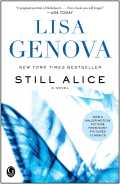 book had been on my “to-read” list for quite some time. I both started and finished it last weekend, and I’m not recommending that you read it quite that fast: 1) you should not neglect other things like people and homework and such; 2) the book is extremely unnerving. And this latter point I think is what makes it such a compelling read: the story reads true (probably because it is written by Genova who has a Ph.D. in Neuroscience from Harvard). The writing is very clear, accessible, and fast-paced, and if you want a book that is at once both affecting and informative, read Still Alice.
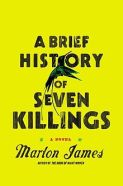 Seven Killings by Marlon James, and I think it is great!
 ISU's student Journal of Creative Works